
Our take on a Sandwich
America is in love with sandwiches. Something to eat that in essence is meat and cheese mostly packed between two pieces of bread that won’t get your hands dirty. A meal that can be consumed sitting down or on the go. To be taken to work or ordered at a deli.
I grew up with the starter sandwich. A peanut butter and jelly. For a kid, that was the entree in my school lunch bag. Next to the Minute Maid Fruit Punch juice box, the Kudos granola bar (more like a candy bar), and a fruit roll up. That bread, pre-sliced, sold in a plastic bag amongst hundreds on the grocery store shelf seemed like how bread has been sold for generations. I grew up thinking this has always been the case and this is how bread should be. Soft, ready to eat, never changing, and easy to prepare.
What great convenience!
Getting a little older meant the fillings changed inside my sandwiches. Deli meats and cheese, mayo and mustard, lettuce and tomato. Going to Subway, and seeing bread being longer and cut on site. That bread was still soft and easy to chew. Sweeter. Togo’s had hot fillings of meatballs or bbq pork. Same long bread. There was a Greek restaurant that made pita pockets. A sandwich that used flatbread called pita that when cooked got hollow and then you cut it in half and filled it with meat and veggies. It was soft bread, sometimes warm.
It was in college when I moved away when I started seeing different breads. In the bay area we have ACME and Semifreddis. Their bread can be made outside of the use of sandwiches. Or the bread made could be used for sandwiches but it did not behave like the store bought shelf stable bread I knew growing up. It has a crunchy crust and a big chew and gets hard within a day. A baguette was common, Levain loaves made big sandwiches. They were harder, robust, full of sourdough and other flavors. They brought more life to the sandwich party. Heartier. But also short lasting. If you were on your own, you had to think outside of the sandwich box to consume a whole loaf. Sandwich day 1, open faced toast day 2, croutons day 3, breadcrumbs day 4. More work had to be applied to just get through what you bought. It meant creativity. It meant being resourceful or wasteful. But the flavors were worth it.
So why the difference in bread? What happened in history to change what a bread bakery offers, to what grocery stores sell on their shelves. And sadly we owe it all to overall convenience advertised to the consumer and ease of transport and travel to the seller.
Turns out, to make a bread never stale and stay soft, certain conditioners and enzymes are used. Since enzymes are considered inert after cooking because heat denatures them, manufacturers do not need to add them to the ingredients list and can hide what they are. Our guts were not built to handle these soft breads over the course of a lifetime of eating. Our guts were built to handle lots of fiber, something shelf bread lacks. Understanding where our food comes from became a tipping point for me, realizing that just because there are things sold at a store, doesn’t mean we should be trusting that all things sold are actually ok to consume or is good for your health.
So where did I go from here with this realization. How, as a chef and caterer, was I to prepare wonderful sandwiches for people who are looking to have small bites, and appetizers for their parties, or make lunches for large groups of people and take care of their well being. It’s easy for companies just to buy from other vendors and call it a day. I want to be different. I have the knowledge and background as a pastry chef, and want our products to stay local and in house as much as possible. As well as find like minded vendors and support them.
I stumbled upon a farmer who cultivates pure whole grain wheat in California. He is harboring the trend that flour can be created with the entire grain. The wheat berry includes bran and germ. All purpose flour is the result of just the endosperm, the starchy stuff that makes up most soft breads and rustic bread. When bran and germ are added, the resulting gluten created when kneading a dough is broken up to small chains and smaller bubbles are produced in the resulting bread making a bread denser. On the flipside, whole grain flour is higher in fiber, and the germ brings the natural flavor to the bread. That’s why there are whole wheat flours sold, but they only have a minimum of 4% bran and germ added. Whole grain is 100% the grain.
And it turns out, different grains have different flavors, and the grains taste different if they are grown in spring or winter. As good as this grain is, and as good as it is in making classic bread recipes, it has even a shorter shelf life for freshness. If not eaten the day it is baked, it can not rely on long gluten chains to stay intact longer and gets dry and crumbly fast. This is not good when making a sandwich slice. I had a hard time creating sandwiches this way for large groups of people. Furthermore, the flavor of the bread acts like another component to the main dish and not a neutral add on to keep things at bay. It would be like adding a filet of salmon to a braised short rib entree. One might overpower the other and you would no longer have synergy.
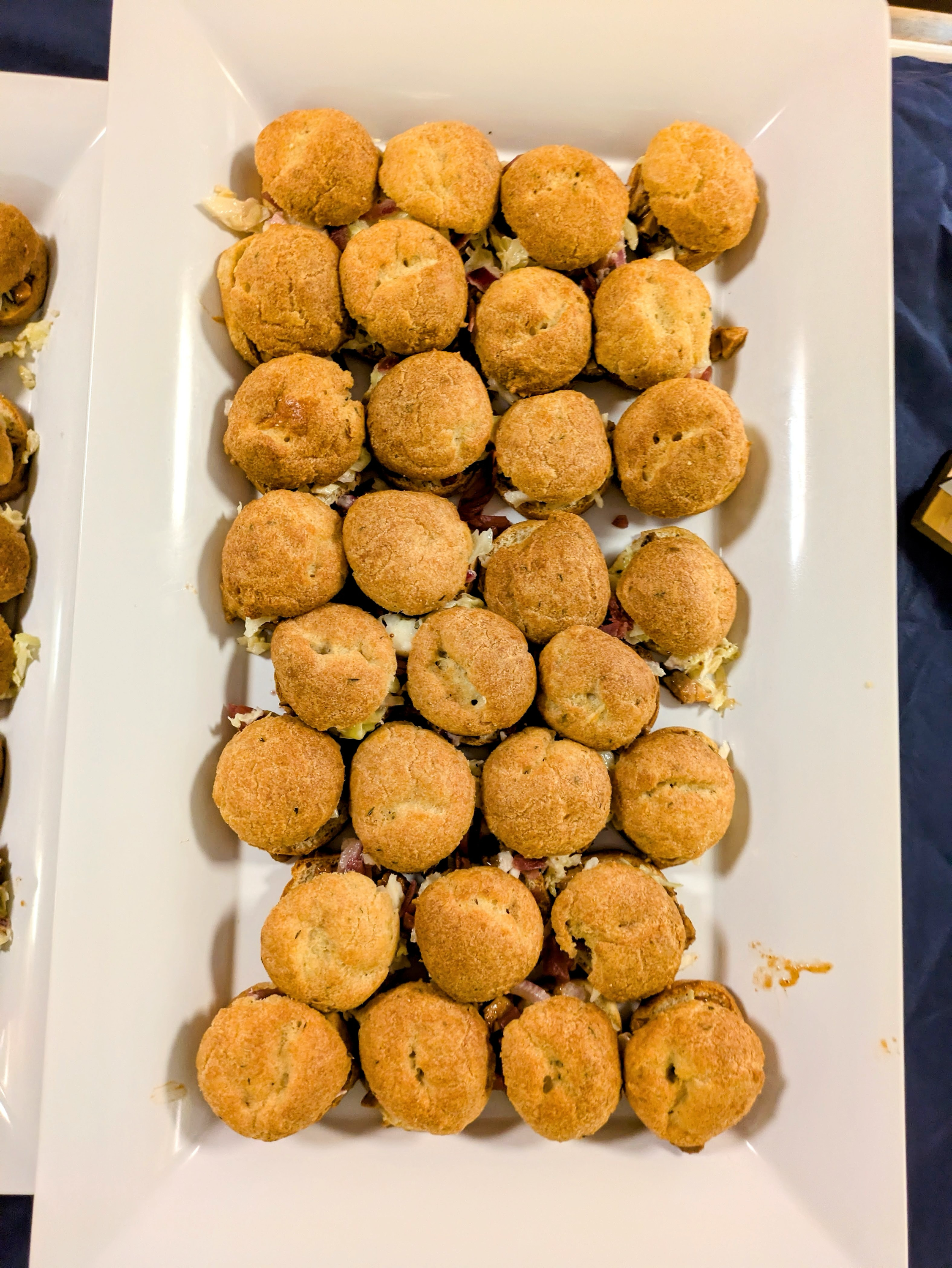
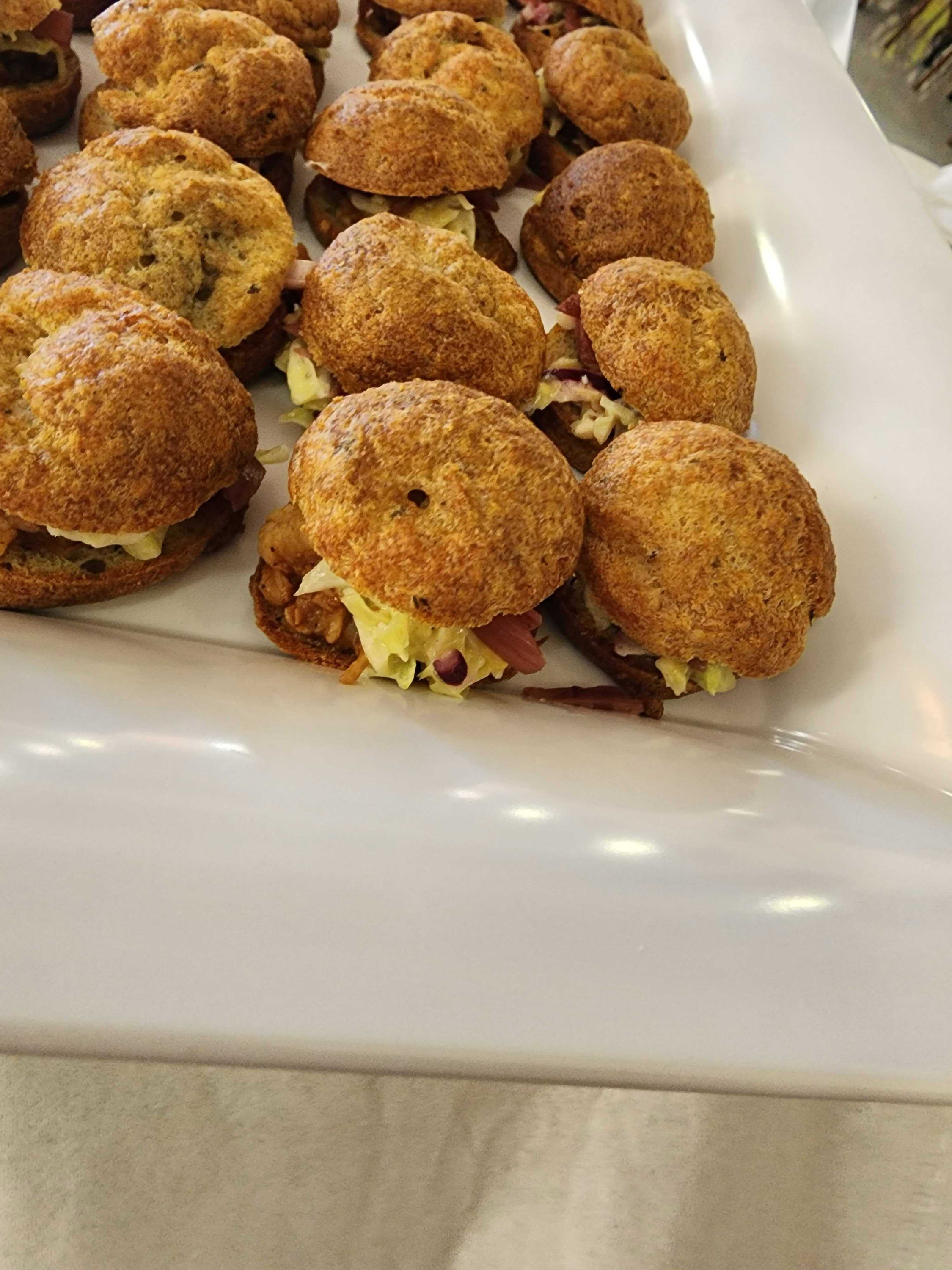
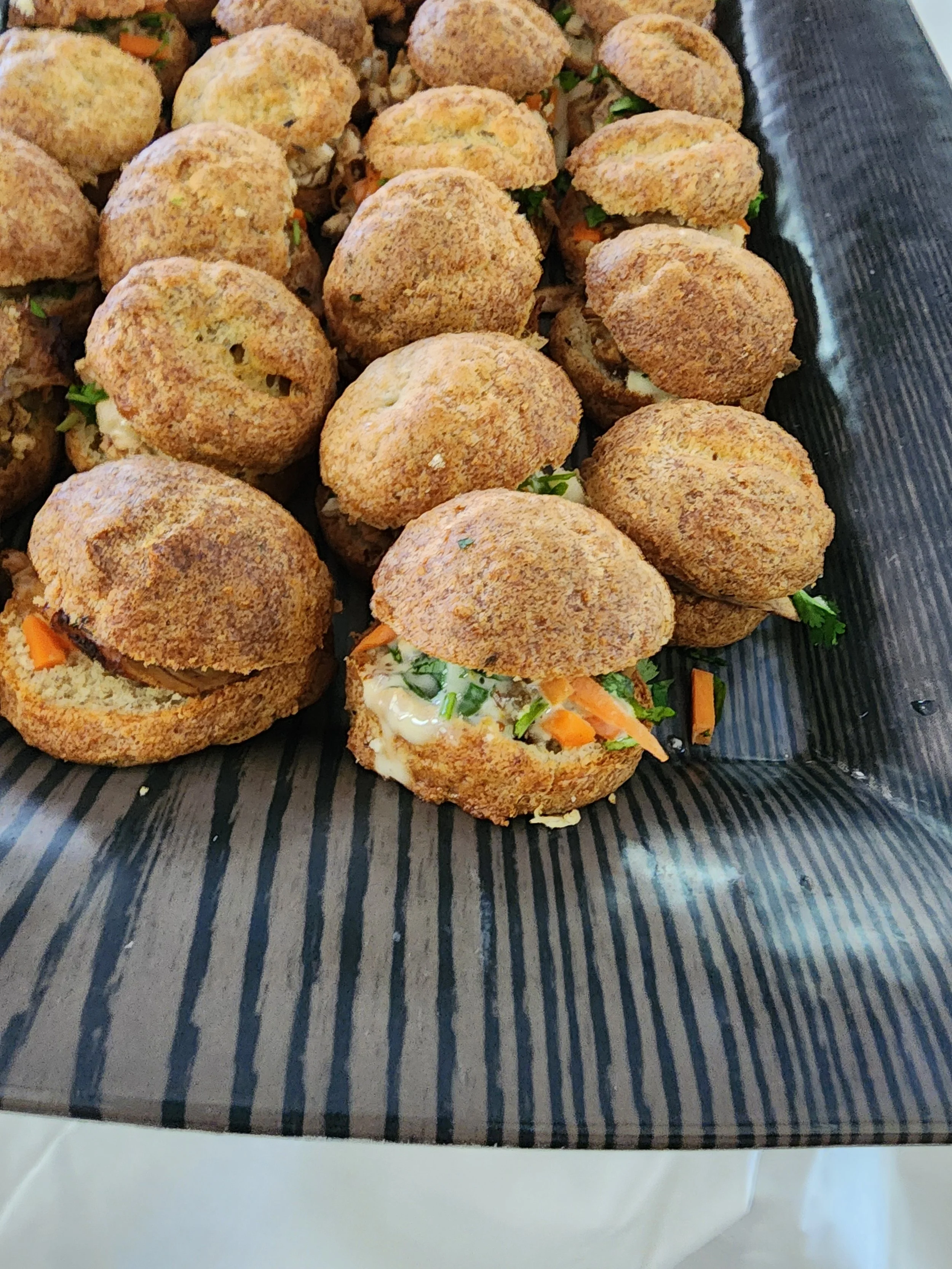
So with that in mind I had to take another approach. Look outside the box in making bread. Fortunately France has another cooking method when it comes to flour in the pastry department that is used in savory cooking. Enter the gouger. A gougere is a savory cream puff made with mixing cheese and herbs. It is light and hollow and meant to be filled. Just like store bought shelf stable sliced bread. Instead of yeast, the dough is reliant on moisture inside to expand and form a bubble in the middle due to the exterior forming and nonexpanding crust. To make it, the flour is cooked in a hot liquid to swell up all the starch granules. Extra protein is added in the form of cheese and eggs. This protein helps where the whole grain flour lacks because it can not form those gluten chains. The resulting bread is a flavorful thin layer of bread that keeps the filling inside and the hands clean.
This has been my latest revelation on how to keep bread healthier and working with local ingredients. And side by side, the comparison of the recipe looks closely like a brioche minus the yeast. I have been happy with the results and recently tried a batch using aged cheddar to make a hamburger and have found that the cheese no longer overpowers the flavor of the meat but actually makes the beef taste more beefier. So for your next gathering, try our sliders and see how a whole grain sandwich compares in your next meal.
